Not so very long ago, autocratic leaders—aka “strongman” rulers—were enjoying a moment. Leaders such as Vladimir Putin, Viktor Orban, Recep Tayyip Erdogan, Xi Jinping, Mohammed bin Salman, and Jair Bolsonaro were rising in prominence and power and envied by ambitious would-be autocrats like U.S. President Donald Trump. Democracy and freedom were in retreat around the world. Even in the United States, the checks and balances enshrined in the Constitution seemed passé, and so-called conservatives were touting the virtues of a “unitary executive.” Pundits and scholars were writing books like The Age of the Strongman or Strongmen: Mussolini to the Present, explaining How Democracies Die, and pondering the possibility of a “concert of kingpins.”
The allure of strongman rule was a predictable response to the various missteps that mainstream democratic leaders had made over the previous few decades. The United States fought and lost several stupid wars, suffered a financial crisis, never held any of the responsible parties accountable, and continued to be led by gerontocratic politicians reluctant to relinquish power to a new generation. Great Britain suffered through a revolving door of inept prime ministers whose main accomplishment was providing fodder for comedians and satirists. France endured the Nicolas Sarkozy presidency, Italy had to survive Prime Minister Silvio Berlusconi’s opéra bouffe, and even more competent leaders such as German Chancellor Angela Merkel eventually stumbled. In an era of economic stagnation, rising refugee and migrant flows, overhyped concerns about terrorism, and other worries, the temptation to turn to a “strong leader” promising to protect ordinary people from an uncertain future proved irresistible to many.
Not so very long ago, autocratic leaders—aka “strongman” rulers—were enjoying a moment. Leaders such as Vladimir Putin, Viktor Orban, Recep Tayyip Erdogan, Xi Jinping, Mohammed bin Salman, and Jair Bolsonaro were rising in prominence and power and envied by ambitious would-be autocrats like U.S. President Donald Trump. Democracy and freedom were in retreat around the world. Even in the United States, the checks and balances enshrined in the Constitution seemed passé, and so-called conservatives were touting the virtues of a “unitary executive.” Pundits and scholars were writing books like The Age of the Strongman or Strongmen: Mussolini to the Present, explaining How Democracies Die, and pondering the possibility of a “concert of kingpins.”
The allure of strongman rule was a predictable response to the various missteps that mainstream democratic leaders had made over the previous few decades. The United States fought and lost several stupid wars, suffered a financial crisis, never held any of the responsible parties accountable, and continued to be led by gerontocratic politicians reluctant to relinquish power to a new generation. Great Britain suffered through a revolving door of inept prime ministers whose main accomplishment was providing fodder for comedians and satirists. France endured the Nicolas Sarkozy presidency, Italy had to survive Prime Minister Silvio Berlusconi’s opéra bouffe, and even more competent leaders such as German Chancellor Angela Merkel eventually stumbled. In an era of economic stagnation, rising refugee and migrant flows, overhyped concerns about terrorism, and other worries, the temptation to turn to a “strong leader” promising to protect ordinary people from an uncertain future proved irresistible to many.
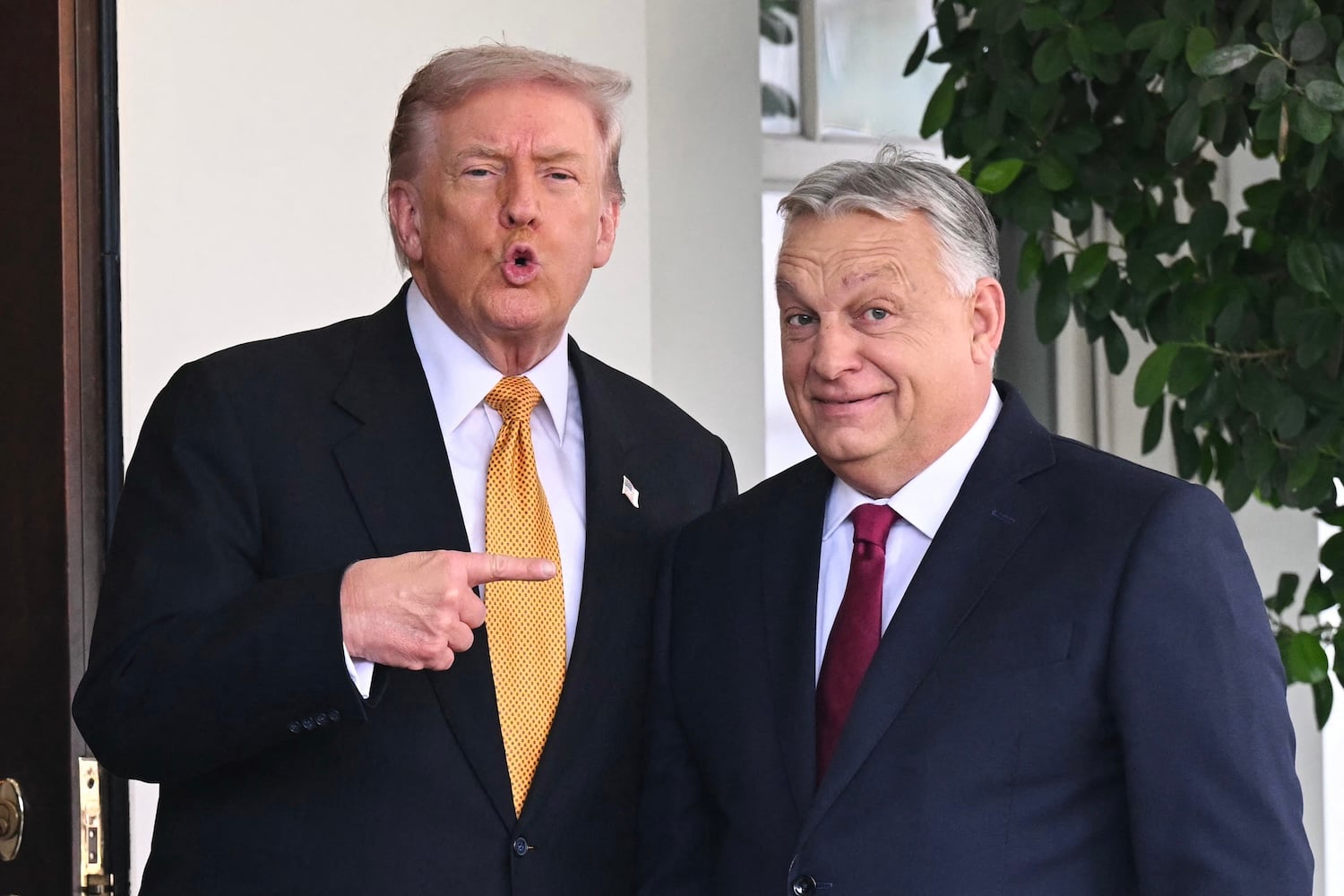
But the stunning electoral defeat of Prime Minister Viktor Orban in Hungary raises the question: Has the market for autocratic strongmen peaked? One might see this event as an isolated incident, because Hungary is a small country (with a total population only slightly larger than New York City) and because every nation has its own peculiar political dynamics. Orban’s defeat stemmed from deep dissatisfaction with the consequences of his rule, however, and there are reasons to think that today’s strongmen—and yes, they are all men—are facing a rockier future for much the same reason. Most of them have done a poor job of governing, and for reasons that highlight the limitations of letting a single strong leader determine national policy.
Let’s start with Orban. He was obviously a highly skilled politician, adept at rigging Hungarian institutions to preserve his hold on power while enriching himself and his cronies. What Orban wasn’t good at—or much interested in, it appears—was improving the lives of ordinary Hungarians, and this failure finally caught up with him. The combination of lackluster economic performance, corruption too massive to conceal, and a growing reliance on sycophantic advisors who had lost touch with the country paved the way for his ouster. Had he done a better job of governing (as opposed to self-dealing), he would likely be in office today.
Or consider Russian President Vladimir Putin. Like Orban, he’s proved to be extremely skilled at keeping himself in power, amassing vast wealth, and eliminating potential challengers, whether they were reformist politicians like the late Alexei Navalny or obstreperous insiders like Yevgeny Prigozhin, who led the Wagner Group before falling out with Putin and dying in a suspicious plane crash. And until a few years ago, Putin had played a weak foreign-policy hand well. Unlike many observers in the West, I think he had valid reasons to see NATO enlargement and other elements of Western policy as a serious and growing threat. But his response to this situation—and especially the fateful decision to invade Ukraine in February 2022—was a blunder whose consequences Russians will rue for many decades to come. The cost to Russia has been enormous, its dependence on its richer and more dynamic Chinese partner has grown apace, and it is falling further behind the rest of the world in the areas of science and technology on which future power will depend. Sweden and Finland have joined NATO and Europe is rearming. Even a decisive victory over Ukraine—which is not a foregone conclusion—will not reverse Russia’s downward slide among the great powers. Although Putin is likely to hold on to power for as long as he lives, Russia will be less prosperous and secure than it would have been under a different leader, and his brutal style of rule is not likely to attract a lot of imitators.
What about President Recep Tayyip Erdogan in Turkey? Like other strongman rulers, he’s been both brilliant and ruthless at consolidating and preserving power even in the face of repeated missteps. He’s also proved adept at using Turkey’s geopolitical position to extract benefits or concessions from others eager for Turkish cooperation. That said, it is hard to look at his 20-plus years in office as a success story. Turkey’s economic performance has been disappointing—largely due to corruption and Erdogan’s ill-advised meddling—and a foreign policy that once sought “zero problems with neighbors” has ended up with Turkey quarreling with many of them. Given this track record, it is not surprising that Erdogan has to resort to increasingly heavy-handed measures to keep himself in power.
And then there’s Saudi Crown Prince Mohammed bin Salman. Although his authority at home appears unshaken, his years as Saudi Arabia’s de facto leader have been humbling. To be clear, it made good sense to try to modernize the kingdom’s economy, reduce dependence on oil and gas, break the power of the religious police, and seek to burnish the country’s international image through sportswashing and other high-profile events, but implementation of this grand vision has been inept and impulsive. His initial foreign-policy efforts—including a costly military intervention in Yemen and a misguided attempt to control Lebanon’s internal politics—backfired badly, and the brutal assassination of dissident journalist Jamal Khashoggi made things worse. The grand ambitions of Mohammed bin Salman’s Vision 2030 project—including building a vast futuristic city out of thin air—have foundered on practical and economic realities, and the sovereign wealth fund financing these efforts recently announced a major downscaling of its plans. This is precisely the sort of fiasco one expects in a system where no one can question the leader’s judgment or insert a dose of reality into their thinking.
Next, consider Israeli Prime Minister Benjamin Netanyahu. He’s not a true autocrat, as he is democratically elected in fair elections and faces domestic constraints (e.g., the need to manage a fractious coalition). Even so, he’s proved to be a brilliant escape artist who has repeatedly managed to cling to power, aided in no small part by America’s willingness to protect Israel from the consequences of his actions. The result of his long tenure, however, is an Israel that is more deeply divided than ever, increasingly a pariah state abroad, facing plummeting public favor in the United States, and still unable to eliminate its various adversaries despite repeated and brutal bombing campaigns. When you can only keep yourself in power by keeping your country at war, it’s not exactly a ringing endorsement of your leadership.
Or take Chinese President Xi Jinping. Xi has been brilliant at consolidating power, despite various obstacles the Chinese Communist Party tried to create to one-person rule, and he’s made some shrewd bets—such as the rapid development of green technologies—that are paying off handsomely and are likely to be even more valuable in the future. He’s also benefited from the errors that U.S. leaders have made, squandering trillions of dollars on pointless wars or acting like a predatory hegemon toward long-standing U.S. partners. But Xi hasn’t been able to rebalance the Chinese economy, address its severe demographic problems, gain control of Taiwan, or solve the problem of chronic youth unemployment. And his seemingly endless purges of senior officials (including senior military commanders) may be as much a sign of weakness as of strength. He’s done better than his fellow strongmen, but not so well as to demonstrate the superiority of this type of leadership.
Which brings me to Trump. He’s not a true autocrat, but who doubts that he’d like to be? Remember: This is the president who thinks he’s the “only one that matters”; who likes to plaster his name on every edifice in Washington; who expects embarrassing displays of fealty from aides, cabinet officers, and foreign leaders; and who wants to build a giant triumphal arch to honor—you guessed it—himself. The good news for those of us who prefer to live in a democracy is that Trump’s performance during his second term has been a train wreck, and his polling numbers show it. His economic policies have hurt rather than helped manufacturers, fueled inflation, and added to the federal deficit. His foreign policy has alienated traditional U.S. allies to no good purpose, and his decision to attack Iran two months ago was a strategic disaster. Cracks are showing in the MAGA edifice, his endorsement of Orban (including sending Vice President J.D. Vance to stump for him) probably helped Peter Magyar beat him, and some of his other foreign buddies—such as Britain’s Nigel Farage and Italian Prime Minister Giorgia Meloni—are distancing themselves. All by himself, Trump has done more to highlight the dangers of a unitary executive than a thousand law review articles ever could.
Meanwhile, some democratic systems and leaders are showing encouraging signs of life. Canadian Prime Minister Mark Carney has just gained a decisive majority in Parliament and has established himself as a visibly sane and so-far successful alternative to Trumpism. New York Mayor Zohran Mamdani has shown that strong convictions, a sense of humor, social media savvy, and a tireless willingness to talk to the other side can pay off at the ballot box. South Korea and Brazil weathered coup attempts and quickly held those responsible accountable, something the United States had failed to do after Trump tried to overturn the 2020 election. And then the voters in Hungary decisively rejected Orban’s cronyism and scare tactics, and Magyar, the designated next prime minister, has plans to dismantle the illiberal political machine that Orban had constructed.
I don’t want to overstate this trend or sound too Pollyannish about these developments. Many countries will continue to be led by autocratic leaders, and I’d bet that some of the strongmen discussed above are more likely to be in power for life than to step down voluntarily or be removed by others. Illiberal “democrats” such as Trump or Erdogan (or Narendra Modi in India) aren’t about to vanish from the world stage. And some of the world’s leading democracies—most notably the United States—face enduring problems of polarization, gridlock, excessive inequality, and the erosion of democratic norms. But the swagger that strongman leaders enjoyed a few years ago may be fading, and their policy failures have demonstrated the limitations of relying on one person’s judgment. As their failures become more apparent, one is reminded again of Winston Churchill’s famous quip that “democracy is the worst form of government, except for all the others.”