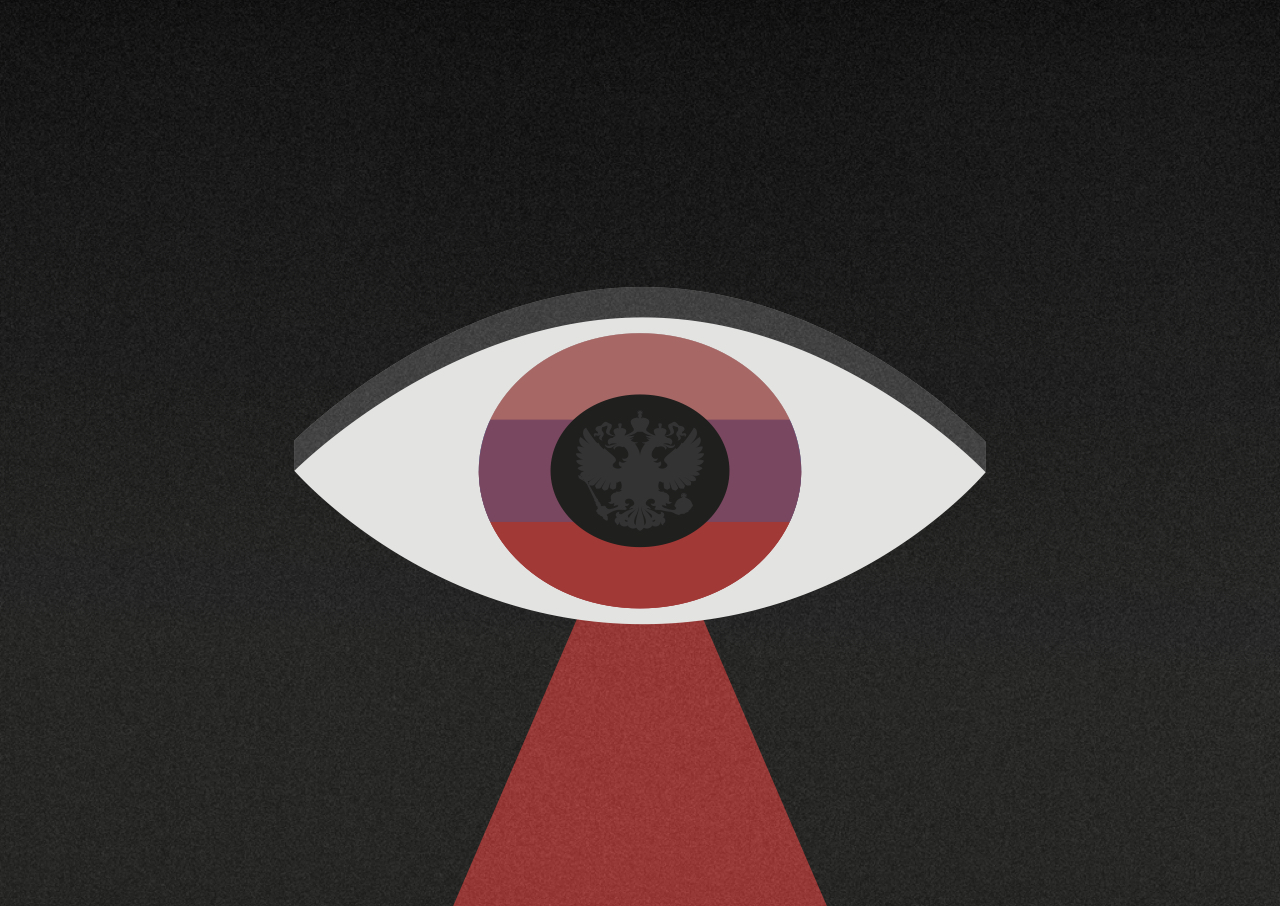
Since the Russian full-scale invasion of Ukraine began, the state has banned the majority of foreign social media resources, including Meta, YouTube, TikTok, and Telegram. These bans were justified as an action toward strengthening the nation’s security.
The Chronology of Closing the Dome
A chronology compiled by Holod Media shows the full scale of what has been dismantled: dozens of platforms, spanning professional networks, messaging apps, streaming services, independent media outlets, etc. In one particularly telling case, a games review aggregator was blocked because one of its listed titles involved growing cannabis.
This process did not begin with the war. LinkedIn was cut off as early as 2016, after the platform refused to comply with a Russian law mandating that user data of Russian citizens be stored on servers inside the country. The block effectively severed access for millions of professionals and skilled workers. It attracted little international attention at the time. In retrospect, it was the first brick. Dailymotion followed in January 2017, added to the banned resources registry following a copyright complaint from a Gazprom-Media channel, even after the site offered to remove the content.
Telegram offers perhaps the most instructive precedent. In April 2018, Roskomnadzor obtained a court order to block the messenger after its founder, Pavel Durov, refused to hand over encryption keys to the FSB. The attempt was catastrophic: in trying to block Telegram’s servers, the agency accidentally took down millions of unrelated IP addresses, disrupting large swaths of the Russian internet. By 2020, the formal ban was quietly lifted, with authorities citing Durov’s “willingness to cooperate against terrorism.” The real lesson, however, was technical: the state lacked the tools to enforce the block. It spent the next four years acquiring them.
After the full-scale invasion began in February 2022, the government moved aggressively. Facebook and Instagram were banned in March 2022 following Meta’s designation as an extremist organization. Twitter (now X) faced a different fate: access was restricted rather than banned outright, ostensibly for failing to comply with Russian “fake news” legislation and for not removing content critical of the war. In a telling paradox, users have faced no legal consequences for continuing to access the “extremist” Facebook and Instagram via VPNs. The law is less a boundary than a warning.
TikTok, under pressure from Russia’s “fake news” law, stopped allowing uploads, live streams, and access to international content from March 2022, leaving Russian users in a sealed feed populated almost exclusively by older, domestically produced posts. The platform did not disappear; it became a different place.
YouTube’s suffocation was more gradual and deliberately obscured. From mid-2024 onward, Roskomnadzor, Russia’s digital censorship agency, began throttling the platform’s loading speeds, officially attributing the slowdown to technical problems with Google’s infrastructure. The effect was unmistakable: YouTube became nearly unusable without a VPN, driving users toward domestic alternatives. The Russian state actively accelerated this migration by investing in platforms like VK Video and RuTube, improving their algorithms, and offering creators financial incentives to relocate. Signal was blocked in August 2024, and Viber followed in December of the same year.
Throughout 2025, Telegram and WhatsApp faced escalating pressure. In August, Roskomnadzor restricted voice and video calls on both platforms, claiming the services were being exploited for fraud and criminal activity. Regional blocks also emerged: authorities in Dagestan and Chechnya cut off access to Telegram after security services warned that the app was being used by “enemies.” In October, partial restrictions were applied to both platforms, and in December, media messaging on WhatsApp was further slowed.
The final escalation came in February 2026. Restrictions on Telegram began around February 10, with a WhatsApp block following two days later. The Kremlin confirmed both blocks, directing Russians to a state-backed alternative called Max, described by Roskomnadzor as a “national messenger” and by WhatsApp as a “state-owned surveillance app.”
Unlike Telegram or WhatsApp, Max lacks end-to-end encryption and is designed as an all-in-one super-app combining messaging, payments, and access to government services, with critics warning of its extensive tracking capabilities. Since 2025, it has been required to come pre-installed on all new devices sold in Russia, and public sector employees, teachers, and students have been required to use it.
By February 2026, Max had reached 77.5 million monthly users in Russia, compared to 95.7 million Telegram users and 80.3 million WhatsApp users, though both had already begun losing ground. The Kremlin’s official justification remained consistent throughout: foreign platforms had failed to store Russian user data locally and had refused to remove content deemed criminal or terrorist. Rights organizations have described the measures as a deliberate attempt to expand state surveillance and tighten information control amid the ongoing war in Ukraine.
Alongside the platforms that made international headlines, Roskomnadzor’s registry includes Grammarly, an English-language writing tool, restricted in 2022 under regulations targeting extremism, and Metacritic, a games review aggregator, added to the banned resources list in 2022 because one of its listed titles involved growing cannabis. A gay dating app, a fanfiction platform, a stock image marketplace, and a collaborative whiteboard tool built in Perm have all followed. The justification is always the same formula. The target is whatever the system finds next.
Emergence of Max as a State-endorsed Alternative
Into the void left by WhatsApp and Telegram stepped Max, though “stepped” implies a certain organic momentum the app never had. Launched in March 2025 by VK, the state-controlled Russian social media giant behind VKontakte, Max was pitched as a “super app”: a single window into messaging, government services, and commercial activity. The Russian bank VTB integrated a digital banking platform early on; Gosuslugi, Russia’s portal for public services, was slated for integration in 2026. Officials promoted it as the backbone of a new national digital infrastructure.
Putin personally endorsed Max at a government meeting in June 2025, announcing that all government services should be transferred to it, an unusual step for a president who, as one Russian internet activist noted, had never before publicly promoted a commercial product.
The adoption campaign was less a rollout than a siege. Posters appeared in apartment building entrances across Moscow and St. Petersburg instructing residents to download Max. Housing ministries ordered all building and neighbourhood group chats to migrate from WhatsApp and Telegram.
In Bashkortostan, management companies were given a hard deadline — 25 August 2025. Moscow’s housing authorities issued similar directives to management companies across the capital, Tula, Nizhny Novgorod, Krasnodar, and Belgorod regions.
One woman in St. Petersburg quit her municipal job rather than installing the app. Students at Siberian universities were told they could not sit their final exams, and some were threatened with expulsion if they refused. These were not isolated incidents of overzealous management. They were the leading edge of a formal mandate. From September 1, 2025, Max was required to be pre-installed on every smartphone, tablet, and computer sold in Russia.
The privacy concerns were immediate and well-founded. Unlike WhatsApp or Telegram’s secret chats, Max lacks end-to-end encryption. Its privacy policy openly states that data may be shared with third parties and state agencies.
Security researchers at RKS Global found that Max can identify whether a user is running a VPN, pinpoint the VPN server’s IP address, determine the user’s internet provider, and detect which blocked content the user is trying to access. The app’s developers denied these findings, but the security researchers stood by them. The legislation backing Max closely mirrors the model of China’s WeChat, a platform described as a powerful surveillance tool used to monitor and suppress dissent.
By March 2026, Max reported 100 million registered users, though this figure comes exclusively from VK’s press service. The growth curve tracks almost perfectly with the throttling of its competitors.
Political Motivations: Sovereignty, Security, and the War on Narrative
The Kremlin’s language around these bans has been consistent: platforms were blocked for failing to store Russian user data locally, for spreading “fake news,” or for hosting content that threatened national security. The framing is always defensive, Russia protecting itself from hostile foreign influence. But the pattern of what gets blocked, and when, tells a different story.
Russia’s path toward digital isolation is not a sudden reaction to geopolitical tensions. It is the result of a long and deliberate process of digital centralization. Over the past two decades, the Kremlin has gradually extended the same control it established over television and print media into the online sphere. The 2019 “sovereign internet” law formalized this ambition, requiring telecom operators to install state-approved monitoring equipment and establishing the technical conditions for RuNet to operate in complete isolation from the global internet. The war simply accelerated the implementation of infrastructure that had been quietly built for years.
The Russian government is pursuing what analysts have described as an ambitious social engineering project: to shape society, particularly younger generations, so that it fully identifies with state policies, while developing a deep distrust of anything deemed hostile or suspicious. The elimination of pluralism online is justified primarily through the narrative of a “cognitive war” waged by the West. Security narratives do the ideological work of making censorship feel like self-defense. Officials have frequently cited the Arab Spring and domestic protests as evidence that online mobilization, allegedly fueled by Western influence, threatens national stability.
In 2024, Russian authorities demanded that Google remove 784,000 pieces of content, a record since statistics began in 2009. In the first half of 2025, Russia accounted for nearly 60% of all such requests received by Google worldwide. Meanwhile, sharing information about how to use a VPN to access blocked content has been made a criminal offense. Since March 2024, Roskomnadzor has also blocked access to websites that explain how to circumvent restrictions, and Apple has removed more than 100 VPN services from its Russian App Store since July 2024 under regulatory pressure.
The goal is not merely to block content. It is to make the act of seeking it an experience as dangerous.
Impact on Public Discourse: the Shrinking of the Conversation
What is lost when platforms disappear is harder to quantify than download statistics, but no less real. Independent Russian journalists, opposition figures, civil society organizations, and ordinary citizens who relied on foreign platforms to communicate with each other and with the outside world have had those channels progressively dismantled. YouTube traffic in Russia fell to 6 to 12% of Russian internet traffic in January 2025, compared to 43% before throttling began. Some turned to VPNs. Many simply shifted to state-approved alternatives, accepting a narrower information environment as the new normal.
The media landscape contracted with equal speed. In the first days of the invasion, on 1 March 2022, the General Prosecutor’s Office demanded the blocking of TV Rain and Ekho Moskvy for publishing “calls to extremist activity” and “deliberately false information” about Russian military operations. The Village was blocked the following day. On 4 March, Meduza, BBC Russia, Radio Liberty, Deutsche Welle, and Voice of America were all blocked simultaneously, on nearly identical grounds. Holod was blocked on 9 April 2022, after its editor-in-chief, Taisiya Bekbulatova, publicly stated the outlet would not comply with Roskomnadzor’s demands. “We do not submit to military censorship,” she said. Throughout 2022, the sites of Bumaga, The Insider, iStories, Novaya Gazeta Europa, DOXA, Nastoyashcheye Vremya, Euronews, Mediazona, Tayga.info, and 7×7 were all blocked under standard Prosecutor General templates. The charge was always the same. The wording barely changed.
Those who resist face growing legal risk. Russian authorities have used internet shutdowns around peaceful protests, elections, and political events, including the funeral of opposition leader Alexey Navalny in February 2024. In 2024 and 2025, selected regions experienced regular shutdowns of both mobile and fixed internet access. During such periods, only government-approved websites and services remained accessible. The “White List”, a set of sites accessible even during a full disconnection, is not a safety net but a preview of what total isolation would look like.
For Russians with ties to the outside, diaspora communities, professionals, journalists, and families divided by emigration or the war, the effect is a slow severance. Messaging apps were not just tools of convenience; they were the infrastructure of transnational lives. When WhatsApp stopped working, so did many of those connections.
“Stop Slowing Us Down”: the Protests that Almost Weren’t
The pushback, when it finally came, arrived from an unexpected quarter: not by veteran opposition figures, but by teenagers on TikTok. From mid-March, calls began circulating on the platform urging Russians to take to the streets on March 29 against internet blocks. The calls were linked to a newly formed movement called Scarlet Swan, whose Telegram channel appeared on March 14. As Verstka established, the channel’s administrators were between 14 and 20 years old, among them a 20-year-old Moscow resident named Stepan Razin, listed as the official organizer in the permit application for a rally at Bolotnaya Square. To evade automated detection, some TikTok videos used coded language, inviting followers to help find a “lost cat” or “missing wallet” at a specific time and place. A protest call disguised as a neighbourhood notice.
The movement’s origins, however, were murkier than they appeared. Verstka found that among the organizers were individuals with ties to pro-state youth structures: one had previously attended a Molodaya Gvardiya event and was a member of both the LDPR youth wing and the New People party; another, a former military cadet now studying law, ran a Telegram channel generating images of himself embracing Putin and speaking in the State Duma. On March 23, Scarlet Swan’s main channel announced that one of its administrators had sold their account to associates of Vladislav Pozdnyakov, founder of the far-right Male State, though minutes later the same channel dismissed this as fabricated.
Opposition activists and journalists warned from the start that the movement could be a security service provocation. Meduza reported that questions about possible FSB links were circulating in the press before the protests even took place. No direct evidence of state involvement was established, but the suspicion never fully dissipated, particularly given that Scarlet Swan’s representatives publicly stated the movement supported the war in Ukraine and was not opposed to the authorities.
Separately, former Nadezhdin campaign chief Dmitry Kisiev submitted permit applications in more than 30 cities across Russia, explicitly distancing himself from Scarlet Swan.
The state moved to pre-empt both. Authorities refused to approve rallies in 31 cities; some permits were revoked even after initial approval. The grounds offered were a catalogue of the absurd: drone strike danger in Vladimir and Murom, Covid restrictions in Moscow, a tree inspection in a Novosibirsk park, too many applicants in Irkutsk, utility accidents in Perm and Khabarovsk. In Tatarstan, all seven applications were refused simultaneously. Before the weekend had even arrived, police had arrested five Scarlet Swan activists.
Russians went out anyway. Protests took place in several cities. At Bolotnaya Square in Moscow, itself heavy with symbolic weight from the 2011 to 2012 protest wave, security forces conducted ID checks and moved to disperse crowds. In total, at least 19 people were detained across all cities on the day, among them people with disabilities and the 72-year-old rights activist and journalist Alexander Podrabinek.
Several Russian outlets citing Kremlin sources reported that the leadership was genuinely concerned about the growing public anger over internet restrictions, and that the discontent may have contributed to a dip in Putin’s approval rating recorded by the state polling service VTsIOM. That the blocks are generating friction even among loyalists is not a minor detail. Pro-state blogger Yegor Kholmogorov publicly deleted his Max channel, writing that the coercive manner in which the app was being pushed on people had crossed every conceivable line. The Kremlin has built a tighter information space. It is discovering, not for the first time, that a tighter space is also a more pressurized one.
Orwellian Echoes: Not a Mirror, But a Structure
Orwell’s Oceania, a fictional state built on total control in the book 1984. The Ministry of Truth rewriting history, the Thought Police monitoring minds, the telescreen watching every room. Russia in 2026 is not that. VPNs still work, imperfectly. People still whisper. The resistance has not been crushed so much as exhausted and displaced.
But 1984 was always more useful as a structural diagnosis than as a literal prediction. What Orwell identified was not a specific technology of control but a specific logic: that the most effective form of authority does not need to imprison everyone. It only needs to make people uncertain about what is true, unsure who is watching, and unwilling to take the risk of finding out. The Russian state has explicitly pursued a strategy of instilling what researchers describe as “a reflex of deep self-censorship, fear, and mutual distrust,” while creating an unrestricted space for the top-down dissemination of approved views.
The progression from blocked LinkedIn to mandatory Max is not a story of sudden authoritarianism. It is a story of institutional patience, the gradual normalization of each new restriction until the next one becomes thinkable. What matters is not whether Russia has achieved total information control, but that the architecture for it now exists, is being expanded, and has been written into law. The dome is not yet fully closed. But the frame is in place, and it is getting harder to see through.