LIVINGSTONE, Zambia—Violet Simakala feared that U.S. President Donald Trump had taken away her access to HIV treatment.
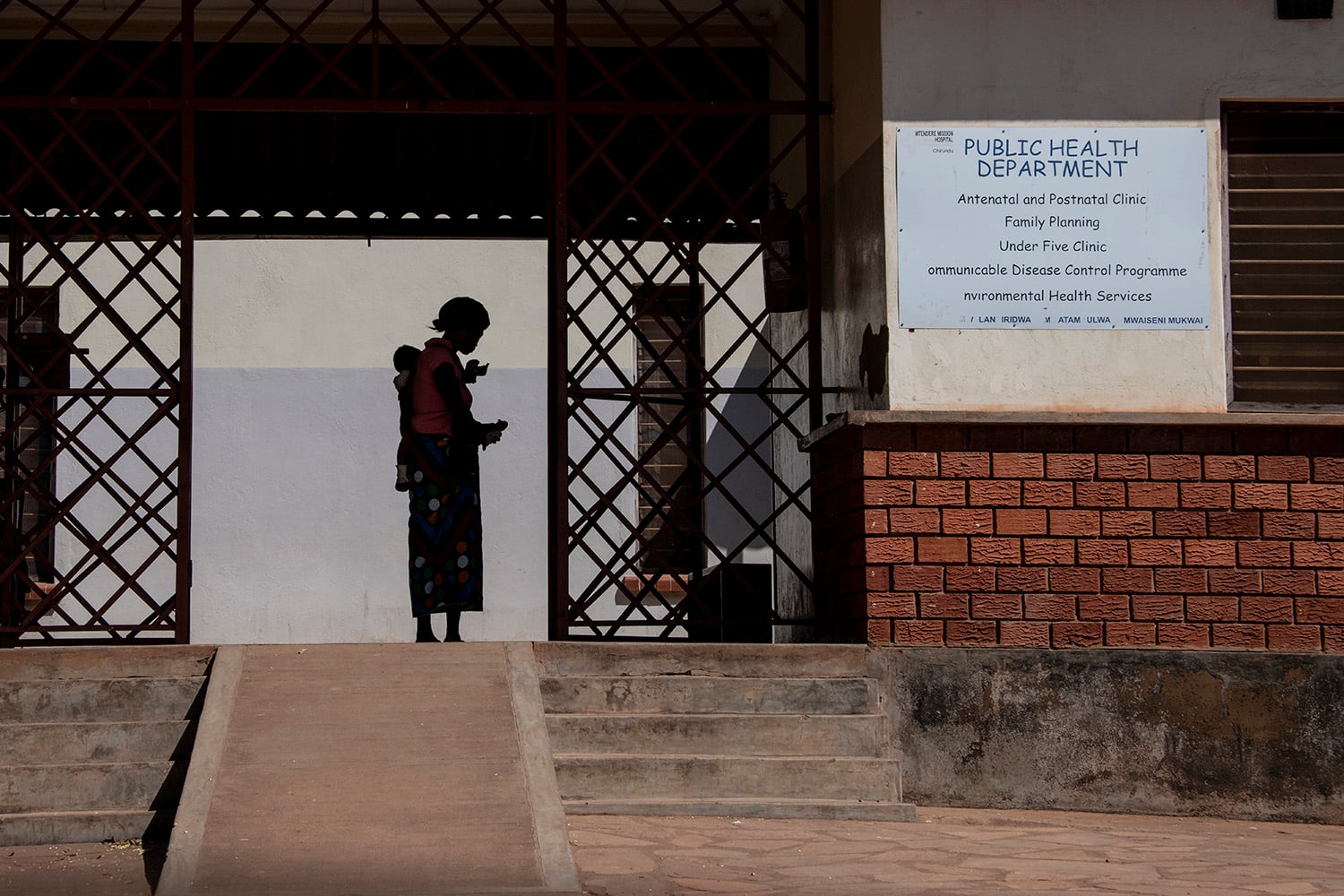
Since being diagnosed in 2007, Simakala has gotten the lifesaving medication from the Mahatma Gandhi Memorial Clinic, a government-run facility that has received significant support from the U.S. President’s Emergency Plan for AIDS Relief, or PEPFAR. Since 2003, PEPFAR has directed billions of dollars into treating and preventing HIV worldwide, helping to drive AIDS-related deaths down dramatically.
Within hours of his inauguration, Trump issued an executive order pausing all foreign aid, including PEPFAR. Across regions of Africa, Asia, and Latin America and the Caribbean, HIV care was immediately disrupted.
Not at Mahatma Gandhi.
Although many of its health workers’ salaries depended on U.S. funding, the clinic filled staffing gaps and maintained basic HIV services with minimal interruption.
“They managed,” Simakala said. “There was no congestion … no wasting time,” which is crucial to her, since she has three children to care for.
The clinic’s resilience is not accidental. It is the product of a yearslong shift in how Zambia’s Southern Province provides HIV services. In 2019, the U.S. Centers for Disease Control and Prevention (CDC), which administers PEPFAR funds in four Zambian provinces, began channeling money directly to those provincial governments instead of routing it through nongovernmental organizations (NGOs). The funds were administered via cooperative agreements, or CoAgs, which define who receives HIV funding, how it will be spent, and how the CDC will implement and monitor those programs.
For most of PEPFAR’s history, NGOs served as the backbone of its operations, implementing lifesaving services on behalf of governments that often lacked the capacity to do so. Across Africa, however, a handful of places are experimenting with using PEPFAR money to directly fund partner governments instead of NGOs.
It was Zambia’s approach that caught the Trump administration’s attention. As part of its “America First Global Health Strategy,” Washington has praised this model as a way to lower costs and help countries build systems that can be sustained without indefinite U.S. support. The administration has negotiated more than two dozen agreements with partner countries centered around a government-to-government funding model, with implementation expected to begin within months.
But experts involved in Zambia’s transition warn that direct government financing is being introduced without a full understanding of what made their approach successful.
When PEPFAR arrived in Zambia in 2004, more than 200 people were dying from AIDS-related illnesses each day. To stem the crisis, PEPFAR funded NGOs to bypass inadequate government systems and rapidly scale up testing and treatment, often operating alongside existing facilities, such as Mahatma Gandhi.
The results were miraculous. Within a decade, estimates for annual AIDS-related deaths in Zambia dropped from 89,000 to 27,000. But officials understood how vulnerable this system was due to its reliance on external support.
“It was a standalone, and that was the biggest threat,” said Callistus Kaayunga, a physician and the provincial health director of Southern Province.
U.S. officials shared his concern. In 2013, amid a push from the Obama administration to make these programs more sustainable, CDC officials began redirecting PEPFAR funding to governments in Zambia’s Eastern, Lusaka, Southern, and Western provinces through CoAgs. The effort stalled, provincial officials said, because the CDC was overly restrictive in how they used the funds.
But by 2019, new leadership in Zambia’s CDC offices renewed the push, this time giving provinces more flexibility. In Southern Province, officials could use CoAg funds to hire staff, purchase equipment, and improve facility operations—steps that allowed them to begin building a system that could function independently.
After decades of providing services, NGOs shifted into support roles, embedding mentors in clinics to identify skill and knowledge gaps and train government health workers. These trainings were open to staff across departments, not just HIV specialists, allowing facilities to deploy workers more flexibly as patient needs shifted throughout the day.
The province also invested heavily in data management. Officers were placed in nearly every facility to audit HIV services and ensure that the transition stayed on track. Weekly virtual meetings allowed staff and CDC officials across the entire province to discuss any concerns that data revealed and share solutions.
The more difficult task, however, was for the public sector to internalize responsibility for a program long run by NGOs. “The biggest challenge … is accepting that now we are the only ones who are going to do this,” Kaayunga said. “We must see it as us.”
Armed with sufficient funds, employees, and political will, Kaayunga began integrating the parallel system’s services into government facilities. For instance, at Mahatma Gandhi, patients like Simakala could access the first steps in routine HIV care, such as weight and blood pressure checks, through general outpatient departments instead of specialty clinics. The change reduced costs and wait times, making it more likely that people would return for treatment.
By 2024, Southern Province had assumed near-total control of its HIV response. The other provinces working with the CDC are close behind. As direct financing increased, outcomes improved: More people were on treatment, and more stayed on it. After an initial funding surge, costs declined—from $79 per patient in 2021 to $44 in 2024.
The provinces still rely on PEPFAR support, but Kaayunga said that there is “strong willpower and political commitment to ensure that these programs are actually sustained.”
Not everyone believes Zambia’s model is ready for export.
HIV programs have long committed to serving everyone in need, including those outside formal health systems. In Zambia, PEPFAR invested in community-based volunteers who test patients at home and deliver medications, as well as NGO-run services tailored to marginalized communities. These efforts reach people who avoid clinics, whether due to stigma, distance, or cost. They are especially important for gay men, sex workers, and people who use drugs, who often face discrimination or fear legal consequences when they seek care at government facilities.
As the Southern Province began receiving direct financing, it prioritized clinic-based care, which is more cost-effective than maintaining specialized centers or outreach services. Community groups warn that this risks leaving behind vulnerable populations who depend on these services—and undermining future progress.
Read More
-
A photo illustration depicting images representing the cost of maternal mortality, showing a collection of items: a photo of hands, a few U.S. dollars, a hospital glove, newspaper clippings, and a landscape photo. The various items are stitched in place with red thread. A photo illustration depicting images representing the cost of maternal mortality, showing a collection of items: a photo of hands, a few U.S. dollars, a hospital glove, newspaper clippings, and a landscape photo. The various items are stitched in place with red thread. Can Sierra Leone Still Keep Its Mothers Alive?
What foreign aid cuts mean in practice in one African country.

-

Palestinian students attend classes at Al-Razi School in Gaza City, Gaza, on Oct. 26, 2025. Palestinian students attend classes at Al-Razi School in Gaza City, Gaza, on Oct. 26, 2025. Gaza’s Reconstruction Must Begin With Its Youth
A better future for Palestine depends on psychological recovery.
-

A man is silhouetted from behind in front of a bright window as he walks down a dark, empty hallway. A man is silhouetted from behind in front of a bright window as he walks down a dark, empty hallway. The Trump Administration’s Epochal Shift on Foreign Aid
The change to funding governments instead of NGOs is long overdue but could easily go wrong.
Elizabeth Phiri, who lives in Livingstone’s Libuyu neighborhood, has seen that risk firsthand. After her husband died of AIDS-related complications in 2012, she started working as a community-based volunteer, receiving a small stipend until her organization lost funding amid the direct financing shift about three years ago. She never considered quitting, though hundreds of other volunteers did without ever being replaced.
“If I stopped working, it would be difficult for my clients,” she said.
One of those clients is Jessie Muleya, a mother of four who runs a small grocery stand from her yard. She fears that if her HIV status became public, customers would stop buying from her. Phiri is one of the few people who knows, and Muleya depends on her to deliver her treatment from a nearby government clinic every six months.
“If she cannot bring me medicine, then I will die,” Muleya said. Phiri believes that this is also true for thousands of Zambians who rely on community outreach services.
Provincial officials acknowledge the value of outreach but cite limited resources. The national government plans to recruit 45,000 community-based volunteers by 2028, though they will focus on more than HIV care. Community leaders worry that these workers will quickly be overstretched, especially if the process is used to reward political cadres rather than identify people who can actually win the trust of fearful clients.
Despite these concerns, the Trump administration is moving ahead with plans to expand direct government health financing through bilateral agreements, some of which have drawn criticism for being overtly transactional. Zambia’s proposed deal has been particularly contentious, with reports alleging that Washington is attempting to tie $1 billion in health financing to mining concessions.
The Trump administration nevertheless sees these direct-financing agreements as key to long-term sustainability and reducing reliance on U.S. support, even as experts warn that the model requires time, money, monitoring, and expertise.
“It needs very strong deliverables and measurable achievements. And it needs money,” said Carolyn Bolton, the chief medical officer at Zambia’s Centre for Infectious Disease Research. Even if countries adopted the CoAg approach or another direct financing model, she added, the process will take “a lot of trust and a lot of time. Triple what you think.”
Those conditions, critics believe, are not being met.
“They’re doing it at warp speed in the wake of these massive and devastating aid cuts and with a highly limited, capacity-constrained bureaucracy,” said Jocilyn Estes, of the Center for Global Development. “The direction isn’t wrong. The execution risk is just enormous.”
In Zambia, annual PEPFAR investments in HIV services increased 25 percent during the early years of the transition; it was only after the provinces were able to start taking over the work of implementing partners that costs came down.
The new agreements, by contrast, begin with lower funding levels than what Washington provided in the 2024 fiscal year and decrease over the course of five years. Partner governments are expected to increase their own investments, but those won’t be enough to offset the reduction in U.S. support.
Then there is the question of who will guide the transition. The Trump administration has either hamstrung or outright eliminated the two major implementers of PEPFAR programs—the CDC and the U.S. Agency for International Development—leaving the State Department to administer the remaining USAID programs without the experts who actually ran them.
At the same time, disruptions to routine data collection—a consequence of Trump’s PEPFAR cuts—have made it harder to track progress in most countries. This is especially concerning, because the new bilateral agreements condition future funding on meeting specific benchmarks.
Time may be the biggest constraint. Five years—when U.S. financing ends under most of these agreements—is not nearly enough time for governments to integrate and pay for the programs that NGOs have been running for decades. It took Southern Province that long to complete its transition, and it’s still not ready to go entirely without U.S. support.
While facilities there withstood the temporary shock of Trump’s initial funding pause, they are still absorbing the effects of subsequent cuts. Even after Zambian officials stepped in with some relief, Southern Province could not retain dozens of former CoAg employees.
Selina Theo’s position, which included identifying people living with HIV who had missed appointments, was eliminated in September 2025. She says the impact is already visible: “I see a lot of clients experiencing interruption in treatments now that there isn’t someone who is dedicated to make follow-ups.”
Zambia’s Southern Province is proof that directly funding governments offers a starting point for the long-term preservation of HIV services. But it also shows how fragile those gains can be—and how quickly they can unravel if support is withdrawn too soon.
“Change is a process,” Kaayunga said. “If you speed up change, chances are that you may actually end up with an outcome that you didn’t desire.”